
District Boards / Journal / The Art of Connection in the DMV
Connection isn't a luxury. In the DMV, it's how you Thrive.
You sent the invite. You handled the food, the space, and the details. People showed up. And somehow, by the end of the night, half the room never spoke to the other half. Your colleagues stayed with their departments. Your friends defaulted to the people they already knew. The event happened. Connection didn't.
This is the most common hosting problem in Washington D.C. And it has nothing to do with effort. It has everything to do with design.

What actually creates connection, what the research says, and how the most intentional hosts and event planners in the DMV have figured out how to build a room where people actually meet each other.
You're in the right place if:
You're the one who makes things happen at work and at home. You planned the event, organized the dinner, and sent the calendar invite. And yet somehow the room still felt disconnected, people stayed in their corners, conversation stayed surface-level, and you left wondering what you missed. This page is the answer to that
1. Why did my event feel awkward even though I planned everything? Because logistics and connection are not the same thing. A venue, a headcount, and a catering order create attendance, not belonging. What creates connection is design: something in the center of the room that gives strangers a low-stakes reason to stand next to each other, reach toward each other, and speak. Most events skip this entirely. The room feels complete on paper and empty in person.
2. How do I break the ice at a work event without it feeling forced? Stop trying to manufacture the moment and design for accidental encounter instead. Icebreaker games fail because they create performance pressure; people have to be interesting on command. What actually works: put a shared grazing table in the center of the room. It gives everyone something to move toward, something to do with their hands, and something to comment on to the person standing next to them. Those first twenty words, "what is that?", "Have you tried this one?" is how every connection at a gathering actually begins. The table creates the conditions. The people do the rest.
3. Why do people always stay in their work silos at corporate events? Because nothing in the room gave them a reason not to. Silos are not a personality problem; they are a design problem. When people arrive without a clear social orientation, they default to what is familiar. Finance clusters with finance. The new hires find a wall. This is predictable behavior in an environment that offers no invitation to do otherwise. The fix is architectural: one focal point everyone moves toward, a layout without a clear back wall to disappear against, food that requires proximity rather than enabling retreat.
4. What is the best catering format for a large group corporate event in DC? A central grazing table, not individual plates, not a buffet line. Individual plates anchor people to their seats. A buffet line moves people through a sequence and deposits them back in their chairs. A shared grazing table in the center of the room keeps people on their feet, in motion, and in proximity to people they didn't arrive with. For large groups, 30 to 100+, the grazing format is the only one that actively works for the room rather than just feeding it.
5. What does loneliness actually do to a team's performance? The numbers are not small. Loneliness costs the U.S. economy an estimated $406 billion annually in workplace absenteeism and lost productivity. The U.S. Surgeon General declared it a public health crisis with the same mortality risk as smoking 15 cigarettes a day. One in three Americans feels lonely every week, and the loneliest demographic is adults aged 18 to 34, the same people staffing your team. A disconnected team is not just a culture problem. It is a retention problem, a performance problem, and a health problem. The gathering is not a nice-to-have. It is infrastructure.
6. How do I host a large gathering without being exhausted before it starts? Identify the single part of hosting that exhausts you most. For most people, it is the food, the setup, and the presentation anxiety, and remove it from your plate entirely. Hosting burnout is decision fatigue. Every choice you make after your guests arrive pulls you out of the room and back into management. The hosts who stay present are the ones who resolved every variable before the first knock at the door. When the food is handled, the setup is done, and the presentation is locked, you become a person at your own gathering instead of the person running it.
7. How do I build a real community in DC when everyone keeps leaving? Be the one who initiates and protects the ritual. The D.M.V is a transient area; people leave when their chapter closes. The social circles that survive turnover are the ones built around recurring gatherings rather than individual relationships. Monthly dinners. Quarterly brunches, the first Sunday of every month. When the gathering is the constant, the community survives the people who cycle through it. Start with four people. Do it every month. That is how a tribe forms in a city that keeps reshuffling.
8. Where do I go to learn more about hosting, connection, and community in the DMV? Keep reading. Everything here links to our full guide: the science of shared meals, how to host across cultures, how to have hard conversations at the table, how to brunch intentionally, and how to build team culture through food. Every guide is rooted in research, real gatherings, and three years of watching what actually brings people together in this city.
If you recognize yourself in any of those, you're already thinking about this the right way. Here's everything the research, this city, and 1,000+ gatherings have taught us about why connection breaks down, and how to fix it.

Why the Room Feels Disconnected
The Room felt Off because Connection doesn't happen by Accident. It Never Did.
Think about the last event that actually worked, where conversations ran long, people exchanged numbers without being prompted, and where you looked up and an hour had passed without anyone checking their phone. That didn't happen because of a good playlist or an open bar. It happened because something in the design of that gathering gave people a reason to reach toward each other.
Most events don't have that. Most events are logistics, a time, a place, a headcount. And logistics, no matter how well executed, do not create a connection. They create attendance.
This is not a small distinction. The U.S. Surgeon General declared loneliness a public health crisis, not a personal failing, not a generational trend, a crisis, with the same mortality risk as smoking 15 cigarettes a day. According to the American Psychiatric Association, 1 in 3 Americans feels lonely every single week. A 2024 Gallup study found that 1 in 5 people feels lonely every day.
These are not statistics about isolated people living on the margins. They describe the administrative assistant at a full firm on K Street. The senior director who leads a team of twelve and eats lunch at her desk. The woman who was at three events last week and felt genuinely seen at none of them.
AARP's 2025 research found that 4 in 10 adults aged 45 and older are now lonely, the highest rate ever recorded, driven by shrinking social circles, exhaustion, and lives that move too fast to stop and connect.
The problem is not that people don't want a connection. The problem is that nothing in the design of most gatherings actually creates it.
"Disconnection fundamentally affects our mental, physical, and societal health. Lacking connection can increase the risk for premature death as much as smoking up to 15 cigarettes a day." — U.S. Surgeon General's Advisory on Social Connection, 2023
The good news is that this is fixable. Connection is not a personality trait distributed unevenly at birth. It is a design problem. And design problems have solutions.
1 in 3 American adults feel lonely every week Source: APA Healthy Minds Poll, 2024
15× Cigarettes per day — equivalent mortality risk of social isolation Source: U.S. Surgeon General's Advisory, 2023
4 in 10 Adults 45+ are lonely — a record high Source: AARP Loneliness Study, 2025
$406B Annual economic cost of loneliness in the U.S. Source: Gallup / Loneliness Index, 2024

The DC Reality
DC is Uniquely Brutal for this. Here's what the City actually does to your Social Life.
Washington DC is one of the most transient cities in the country. People don't move here to put down roots; they move here for a fellowship, an administration, a two-year contract, a career window. And then the window closes, and they leave. The DMV area reshuffles constantly. Neighborhoods shift. Friend groups dissolve mid-sentence. The colleague who was your anchor takes a role in another city, and your social infrastructure goes with her.
If you don't actively build connection in DC, the city will do what it does: move on without you. You'll have a full calendar, a long contact list, and a LinkedIn network that looks like a community, and still feel completely alone on a Tuesday night with nowhere to be that actually matters.
The DC professional person knows this intimately. They are at the peak of their career, managing teams,households, relationships that require maintenance, they barely have bandwidth for. They are the one who holds things together, at work, at home, and in their friend group. They are also often the one who initiates. Who sends the text. Who books the restaurant? Who makes the gathering happen, because if they don't, it won't happen.
And here is where it gets harder: they are usually the last person in the room who gets actually to be present at the gathering they created. Managing the food, managing the flow, managing the impression, while the guests are already two drinks in and laughing. They arrive exhausted and exits depleted, having hosted a room they never quite got to be in.
This is not a hosting failure, it's a design failure. And the fix is simpler than it sounds: the part of hosting that exhausts her most, the food, the setup, the presentation, is also the part most available to be handed off. When that's gone, what's left is just the room. And you are extraordinarily good in a room.

The Research
What Science actually says about why Shared Meals create Connection faster than almost anything else.
The Research on Social Connection and mortality is among the most replicated findings in Public Health.
Strong social ties reduce premature death risk by up to 50%
A landmark meta-analysis of 148 studies, covering more than 300,000 participants, found that the quality and frequency of social relationships predict survival outcomes as reliably as smoking, obesity, and physical inactivity. People with strong social connections live measurably longer. The mechanism is well understood: stress response, immune function, cardiovascular health, and behavioral patterns all improve with consistent human contact. Isolation degrades them.
Shared meals are the fastest path to trust, and the research is specific about why
Oxford evolutionary psychologist Robin Dunbar spent years studying what actually builds social bonds across human groups. His finding: eating together is one of the most consistently reliable mechanisms for building trust, more effective than conversation alone, more effective than shared activities. The act of sharing food triggers the same neural pathways as physical touch. It releases endorphins. It reduces cortisol. It creates a physiological state in which people are more open, more honest, and more likely to feel positively toward the people around them.
This is why a grazing table in the center of a room changes the social dynamics of that room. It is architecture for human connection.
Frequency matters more than depth, especially at work
Research from the University of British Columbia found that frequent, low-stakes social contact builds social resilience more effectively than occasional deep interactions. The implication for corporate events and team gatherings is direct: the quarterly all-hands that tries to do everything in one night is less effective than four smaller, more regular gatherings that give people repeated low-pressure reasons to be in the same room. Familiarity is not built in a single evening. It is built across many ordinary ones.
Community is a health behavior, the CDC says so explicitly
The CDC's most recent data classifies social connection not as an emotional outcome but as a health behavior, something to be practiced and protected in the same category as exercise and sleep. You do not wait until you feel connected to gather. You gather to become connected. The gathering is the practice, not the reward for having a thriving social life. This distinction matters enormously for anyone who keeps putting off the dinner party until life settles down. Life does not settle down in DC. The gathering has to happen anyway.
"Strong social connections help us live longer, healthier lives and reduce the risk of chronic disease, serious illness, and mental distress." — Centers for Disease Control and Prevention, 2024
How to Stop Silos Before They Start
Silos are not a personality problem. They are a design problem. Here is how to solve them.
Every event planner and host in DC has watched it happen. The team arrives and immediately clusters, finance with finance, comms with comms, the new hires gravitating toward each other in the corner. The guests who already know each other stay in formation. The people who don't know anyone find a wall to stand near and wait for the event to be over.
This is not a room full of unfriendly people. This is a room with no architecture for an encounter.
Silos form because people default to what is comfortable when nothing in the environment gives them a reason to reach toward something unfamiliar. The design of most corporate events actively enables this: assigned seating by department, food stations that separate rather than gather, programming that fronts conversation instead of enabling it.
Here is what actually dissolves silos, not theories, observations from rooms that worked:
Put something in the center that everyone has to move toward
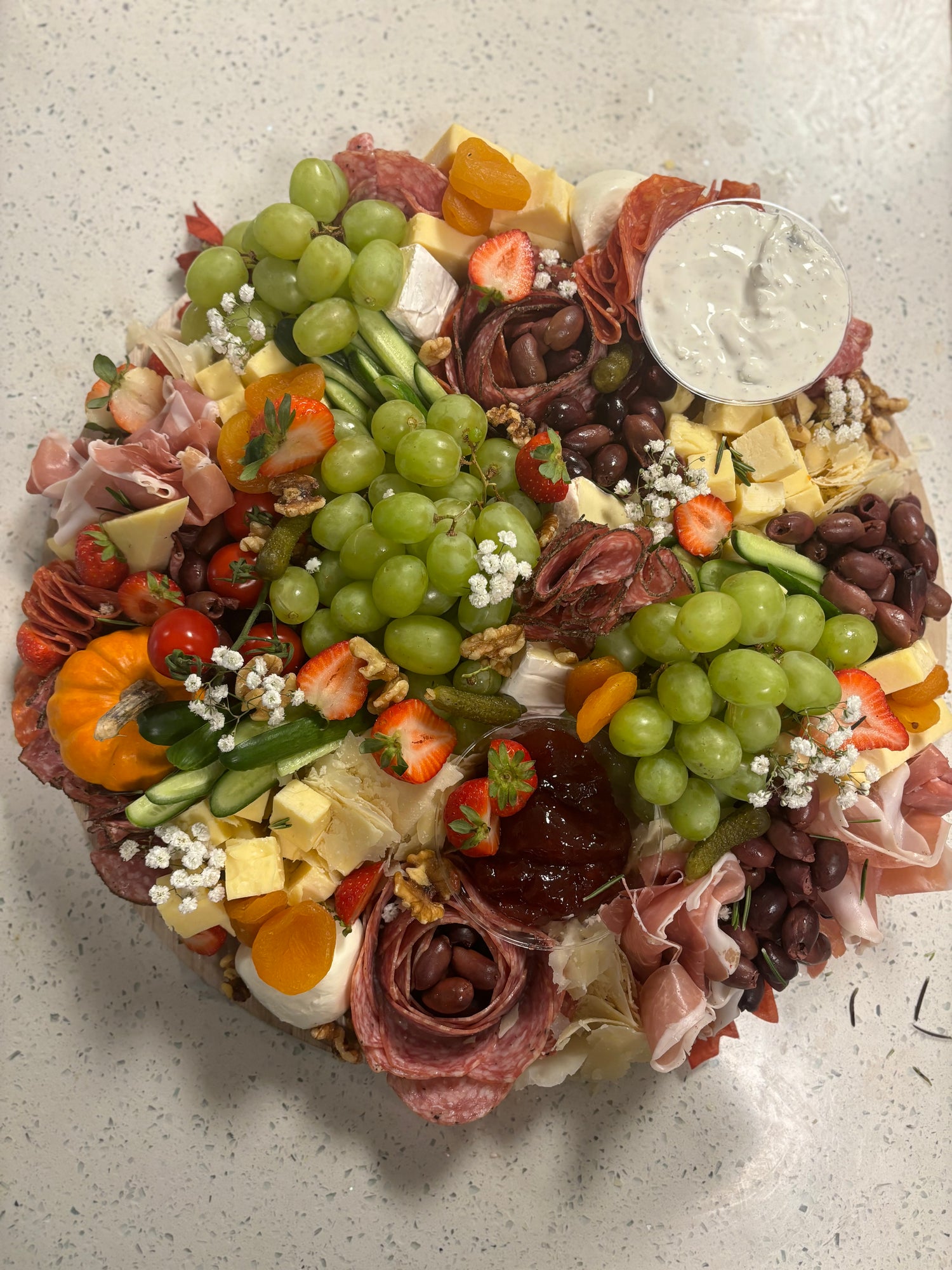
A single grazing table in the center of a room forces physical convergence. People approach it from different directions, stand next to people they didn't arrive with, and have an immediate, low-stakes reason to speak. "What is that?" "Have you tried this one?" These are not profound exchanges. They are the first twenty words of every connection that ever formed at a gathering. The table creates the conditions. The people do the rest.
Design for accidental adjacency
The most connected rooms are not the ones with the most programming. They are the ones with the most accidental adjacency, moments where two people end up next to each other without having chosen it. High-top tables in odd numbers. A board that requires two people to reach across each other. A room layout without a clear back wall to disappear against. These are small design decisions with outsized social consequences.
Remove the pressure of the big conversation
Corporate gatherings fail when they try to manufacture depth, forced icebreakers, structured introductions, and round-table shares. These create performance anxiety, not connection. What works is the opposite: give people something to do with their hands, something to look at together, something to offer each other. A shared board is exactly this. It removes the social pressure of having to be interesting and replaces it with the simple social act of being present.
Mix the room on purpose
The most powerful gatherings in DC are the ones that cross the silos that already exist in the city. Government and creative. Nonprofit and private sector. The analyst and the artist. A shared table and a low-stakes environment do more for cross-community connection in two hours than any networking event engineered for that exact purpose. If you want a room that actually builds bridges, put people at the same table who have no professional reason to already know each other.
How to Host Without Burning Out
What the best hosts in DC actually do differently, before a single guest arrives.
The gatherings people reference for years are never the most elaborate. They are the most present. The host sat down and stayed seated. The table that gave people a reason to linger. The food was beautiful enough to anchor the room without demanding anyone explain it.
Here is what separates the hosts who leave their own gatherings energized from the ones who leave depleted:
1. They design the food for encounter, not just consumption. A shared grazing board gives people something to gather around, reach toward, and comment on.The act of building your own bite is inherently social; it slows people down, creates proximity, and gives strangers a reason to stand next to each other. A plated dinner does none of this. It assigns people to seats and locks them in for the evening.
2. They make their decisions before the guests arrive, not during. Hosting burnout is decision fatigue. Every choice you make after your guests walk in, what to serve next, where to put something, what's running low, pulls you out of the room and back into management mode. The hosts who stay present are the ones who resolved every variable before the first knock at the door. Catering, setup, presentation were offloaded entirely.
3. They give the gathering a quiet intention. The most connected events have a purpose beyond logistics, a celebration, a check-in, or an introduction. When people know why they're there, even implicitly, they show up differently. They are more open. They stay longer. Even the simplest framing, "I just wanted us all to be in the same room", functions as an intention. It tells your guests that this gathering was deliberate. That they were chosen. That matters.
4. They make dietary inclusion a given, not a question. In a room where every guest finds something made for them, no one spends the first twenty minutes quietly calculating what they can eat. No one feels like an afterthought. Vegan, vegetarian, gluten-free, nut-free, when the spread is genuinely inclusive, everyone relaxes at the same moment. Connection follows relaxation. Every time.
5. They leave space in the room and in the schedule. Overcrowding, of dishes, of people, of programming, kills conversation. The best gatherings feel unhurried because the host built margin in. Between the dishes. Between the agenda items. In the layout of the room itself. White space in a gathering is not emptiness. It's room for something unexpected to happen.
6. They let the food carry the aesthetic weight, so they don't have to. You do not need a florist, a calligrapher, and a themed tablescape to create a room that stops people in their tracks. One architecturally composed grazing table does it. When the food is stunning, guests are oriented, the room has a focal point, and the host is free to be a person instead of a stage manager.
7. They step away from the kitchen and stay in the room. The single most powerful thing a host can do is be present. Not checking, not managing. Present. This is why outsourcing the part of hosting that consumes you is not indulgence; it is the condition for everything else working. The food is handled. The setup is done. Now go and be the reason people are glad they came.
"The grazing table made hosting so much easier and elevated the entire event. They were professional, communicative, and attentive to details like allergies and presentation." — District Boards Client, Birthday Brunch & Housewarming, Washington DC
How to Actually Build Connection in This City
A practical framework for building real community in DC, not a wellness manifesto, just what works.
Most people in DC know they need more connection. They also know they are not prioritizing it. The intention is present. The execution collapses under the weight of everything else on the calendar.
Here is what actually works, observed across 1,000+ gatherings in this city, grounded in the research, and written for someone whose schedule does not have margin to spare.
Start smaller than your instincts tell you to
The dinner for twelve that you have been planning for three months will not happen. The dinner for four next Thursday will. Research consistently shows that gathering size is inversely related to conversational depth. Four to six people is the sweet spot where genuine connection becomes possible. Twelve people are at a networking event. Four people are in a relationship. Start there. Add people as the habit forms.
Be the one who sends the text
In DC, everyone wants to gather and no one wants to organize it. They will come. They will enjoy it. They are not going to initiate it. The person who sends the text, "my place, Thursday, 7 pm, I've got the board, just show up", becomes the gravitational center of her social circle. This is not a small thing. In a transient city, being the initiator is the most reliable way to ensure your community stays intact when people leave. They keep coming back to the table you set.
Build the ritual, not just the event
A single dinner is a nice evening. A recurring dinner is a community. Monthly gatherings, quarterly brunches, the first Sunday of every month, recurring rituals build something that one-off events never can: a shared history. When people know they will be in the same room again, conversations go deeper, honesty increases, and relationships compound. The event is not the point. The pattern is the point.
Cross the silos the city has already built
DC runs in channels, government, nonprofit, diplomatic, creative, and private sectors. Most people's social lives are confined almost entirely to their professional lane. Some of the most powerful gatherings in this city are the ones that deliberately mix those channels. The policy director and the artist. The lobbyist and the local chef. Bring them to the same table. Give them something beautiful to reach toward together. Let the rest happen.
Use food as the social infrastructure it actually is
When the table is abundant and beautiful, guests stop performing and start being. There is always something to reach for, comment on, or offer to the person next to you. Food removes the social pressure of having to be interesting and replaces it with the simple act of being present. A well-curated grazing spread does not just feed people. It gives the room a reason to stay in motion, and people in motion meet each other.

The Map · Where You Are in This
Connection is not one thing. It is a system. Here is how to read yours.
Most people in DC think about connection as a feeling, something that either happened at an event or didn't. Something you have enough of or don't. But connection is not a feeling. It is a structure. And like any structure, it can be assessed, designed, and built with intention.
Before you can fix what is not working in your social life, or in the room you are about to host, you need to understand what kind of connection you are actually trying to build. Because the dinner party strategy looks different from the corporate event strategy. The tool for deepening a friendship looks different from the tool for meeting someone new. The event that dissolves a team silo is designed differently from the one that maintains a core friend group.
Here is the full map.

The 5 Types of Connection Every Person Needs
You don't need more contacts. You need the right architecture of relationships.
Research on social networks consistently identifies that the healthiest, most resilient social lives are not the largest ones. They are the most layered ones, built across distinct categories of relationship, each serving a different function, each requiring a different kind of maintenance.
Most people in DC are overstocked in one category and critically under-resourced in others. They have 800 LinkedIn connections and no one to call on a Tuesday night. They have colleagues who would take a bullet for them professionally and have never once met outside of work. They have a huge network and a very small tribe.
Here are the five types of connection every person needs, and what happens when any one of them is missing.
1. The Core Circle — 3 to 5 people
These are your people. The ones who know your full story, not just the professional chapter. The ones you can call at 11 pm without a reason. The ones who were at the table when the thing happened that changed your life.
Research by Oxford psychologist Robin Dunbar found that humans are neurologically capable of maintaining a maximum of five genuinely close relationships at any given time. Not five hundred. Five. This is the inner ring, the relationships that require the most investment and return the most in terms of emotional resilience, longevity, and well-being.
In DC, this circle is under constant threat. People transfer. Administrations change. Life reshuffles. The hosts who protect this circle do it the same way: they gather regularly, ritually, and on purpose. The recurring dinner is not a social nicety. It is maintenance on the most important infrastructure in your life. [→ Read: The Recurring Dinner: How One Monthly Gathering Builds a Lifelong Community]
2. The Meaningful Many — 15 to 20 people
Just outside the core circle is a wider ring of people you genuinely care about, check in with regularly, and would show up for when it matters. Dunbar called this the "sympathy group." These are the people at your birthday dinner, the ones who come to your housewarming, the friends of friends who have become their own thing over time.
This group is the most natural beneficiary of the gathering. A dinner for ten, a brunch for twelve, a gathering with a theme or a season as the excuse, these events are how the meaningful many stay meaningful. Without regular contact, they drift into acquaintances. The investment required is low. The return is significant.
3. The Extended Network — 50 to 150 people
Dunbar's number, the cognitive limit of people you can maintain a genuine social relationship with, is approximately 150. This is your extended network: the people you know, recognize, and feel a real warmth toward, even if you see them infrequently. Former colleagues. Old neighbors. People from a previous chapter of your life who still matter.
In the D.M.V., this network is unusually powerful because the city is unusually small in the ways that matter. The person you know tangentially from a nonprofit five years ago is now running a division you need access to. The former intern is now the chief of staff. DC's extended networks have outsized professional and social consequences. They require maintenance, not constant, but intentional. A larger gathering twice a year, an introduction made, a reason to stay in the picture. [→ Read: The Difference Between a Network and a Tribe, And Why Only One Will Save You in DC
4. The Cross-Silo Connection, the most underbuilt relationship in DC
This is the connection that does not exist yet but should. The person in a completely different lane, a different sector, a different neighborhood, a different cultural world, whose perspective and relationships would fundamentally expand yours if you were ever in the same room.
DC runs in channels. Government stays with government. Creative stays with creative. The policy world and the art world pass each other on 14th Street and never speak. Some of the most powerful social and professional outcomes in this city come from the room that mixed those channels deliberately, the dinner where the federal attorney and the local chef ended up talking for three hours, the gathering where the diplomat and the community organizer found out they were working on adjacent problems.
This connection does not happen at networking events. It happens at tables. [→ Read: You Can't LinkedIn Your Way Into a Tribe: Why Being In the Room Still Wins
5. The Weak Tie: The most underestimated relationship you have
Sociologist Mark Granovetter's landmark research found that the most valuable information, opportunities, and introductions in a person's life tend to come not from close friends, who occupy the same information ecosystem, but from weak ties: acquaintances, peripheral contacts, people on the edge of the network. The neighbor you see occasionally. The person you met once at a gathering and liked but never followed up with.
Weak ties are how new things enter your life. Jobs, ideas, perspectives, relationships. The gathering that brings a diverse mix of people into a room and gives them a low-stakes reason to talk is a weak tie machine. A central grazing table that keeps people on their feet and in motion generates more new weak ties in two hours than a month of strategic LinkedIn activity.
How to identify what is missing from your own relationship architecture, and the specific gathering strategy for rebuilding each category, lives here. [→ Read: The 5 Types of Connection Every Person Needs in Their Life

Social Cues — Reading the Room
The Room is always telling you something. Most hosts aren't listening.
Connection does not announce itself. It arrives in small signals, a body turned toward another body, a laugh that goes a beat longer than it should, two people who were strangers an hour ago and have now migrated to the same corner of the room together. The host who can read these signals, who can see what is happening in the room and respond to it in real time, is the host whose gatherings feel effortless even when they required enormous effort to produce.
Most hosts are too busy managing to observe. The food is consuming their attention. The logistics are running in a loop in the background. They are physically present and socially absent, which means they are missing the information the room is giving them.
Here are the social cues every host and event planner needs to know.
The clustering signal
When people cluster in groups of two and three and stop moving, the energy of the room has calcified. Early in a gathering, this is normal; people are warming up, finding their footing, defaulting to who they already know. But if clustering persists past the first thirty minutes, it means the room has no architecture pulling people out of their comfort zone. The fix: introduce the food. A central spread that requires movement, that gives people a reason to get up, approach, and stand next to someone new, breaks clustering faster than any social programming.
The wall signal
A guest standing alone near a wall or at the edge of the room is not being antisocial. They are waiting for an invitation they have not received yet. This is one of the most important reads a host can make, and the response is simple. Walk over. Bring them into a conversation already in progress. Introduce them with a single specific detail that gives the other person something to ask about. "This is Maya, she just moved to DC from Lagos, and she works in climate policy" is an introduction. "This is Maya, she's a friend" is a dead end. [→ Read: How to Introduce Two People So They Actually Want to Talk to Each Other]
The exit signal
A guest who is looking for their coat, checking their phone, or making quiet goodbye rounds is telling you two things: the gathering met their need, and they have reached their social capacity for the evening. The right response is a warm send-off, not a guilt trip, not "you're leaving so soon?", and a specific bridge to the next gathering. "We're doing this again in six weeks. I'll text you." That single sentence converts a one-time attendee into a recurring member of your community.
The depth signal
Two people who have stopped looking around the room, who are fully turned toward each other, whose body language has closed off from the rest of the gathering, are in a real conversation. This is the signal that the gathering is working. The host's job in this moment is to protect it. Do not interrupt. Do not redirect. Do not drag them to meet someone else. Real connection, when it happens, is the entire point. Let it run.
The energy drop
Every gathering has a natural arc. Energy builds, peaks, and begins to fall. The energy drop usually comes ninety minutes to two hours in, the food has been consumed, the first wave of conversation has run its course, and guests are starting to recalibrate. The host who reads this moment correctly uses it to either deepen the gathering, move to a smaller room, introduce a bottle of wine, shift from standing to seated, or close it gracefully. The gathering that ends on a high note is the one people want to repeat. [→ Read: Social Cues Every Host Should Know, How to Read a Room and Respond in Real Time

Room Architecture
The Layout of the room determines who talks to whom.
Before a single guest arrives, before any conversation begins, the physical arrangement of your space is already making decisions about who will connect and who will not. The position of the food, the placement of the furniture, and the presence or absence of a clear back wall, these are not aesthetic choices. They are social architecture. And most events get them wrong.
Here is what the research on spatial design and social behavior shows, and what it means for the room you are about to host.
The center changes everything
A focal point in the center of the room, a grazing table, a bar cart, a fire pit, anything that draws people in from multiple directions, is the single most effective design decision a host can make. It does three things simultaneously: it gives people a reason to move, it creates a neutral zone where strangers have a low-stakes reason to be in proximity, and it prevents the room from stratifying into permanent clusters around the perimeter.
The geometry matters. A table in the center is approached from all sides. A table against the wall is approached from one side. The difference in social outcomes between these two placements is not small. Studies on event design consistently find that central food placement increases the number of new social interactions at a gathering by a significant margin compared to perimeter placement. Put the board in the center. Always. [→ Read: The Gathering Table: Why What's in the Center of the Room Determines What Happens in It
Eliminate the back wall
Every room has a back wall, the furthest point from the entrance, the place where people default when they do not know where to go. Guests who find the back wall early in a gathering tend to stay there. They have oriented themselves, claimed a territory, and the social cost of moving has now become higher than the social benefit.
The fix is to remove the option. Push furniture away from the back walls. Place something interesting, food, a conversation piece, a display, in the spot where the back wall would otherwise invite retreat. Make engagement the only option.
High tops over seated tables for mixed groups
For gatherings where the goal is new connections, corporate events, larger parties, mixed-community dinners, standing height tables produce significantly more social interaction than seated tables. When people are standing, they move more freely, conversations are shorter and more numerous, and the social cost of approaching someone new is lower. Seated arrangements create social commitments. Once you sit down next to someone, the unspoken contract is that you are in that conversation for a while. This works beautifully for intimate dinners. It works against you at larger gatherings where the goal is cross-pollination.
Design for the first five minutes
The first five minutes after a guest arrives determine whether they will feel comfortable for the rest of the evening. A guest who enters a room and immediately has something to orient toward, a host who greets them, a drink in their hand, and a table to move toward relaxes. A guest who enters and must immediately make a social decision in a room full of strangers they do not know is already on the back foot.
Design the arrival experience. Know where you will be when the first guests come in. Have something for them to hold. Have somewhere for them to go. The first ninety seconds of a gathering are the most important ones you will manage all evening. [→ Read: Room Architecture for Connection: How the Layout of Your Space Changes Who Talks to Whom
The Dinner Party Is Back

The most modern thing you can do is invite six people to your Home for Dinner. No Agenda. No Theme. No Phones.
For about a decade, the dinner party was quietly declared obsolete. Too much effort. Too much time. Restaurants were easier. Group chats were easier. Experiences were marketed as the new gathering, concerts, escape rooms, and wine tastings with colleagues you barely know. Connection was supposed to happen somewhere out there, in a curated environment someone else designed.
It did not work. The data on loneliness did not improve. The Surgeon General issued an advisory. AARP published a crisis report. And somewhere in the middle of all of that, quietly, the dinner party came back, and we are here for it .
Not the formal dinner party of a previous generation, the one with assigned seating cards and a three-course structure and ambient pressure to perform. The new dinner party is simpler and more honest. There are six people at a table. A spread in the center. No phones by informal agreement. A conversation that has nowhere to go until it has run its course.
This isnt only nostalgic, this us evidence-based social design. Here is what the research supports.
Small groups produce disproportionate connections
Oxford's social brain research found that groups of four to six people are the optimal size for genuine social bonding. Below four, the group feels intimate to the point of pressure. Above eight, conversation fragments, and the gathering starts behaving like a party, surface level, high energy, low depth. Four to six is the zone where people say things they mean, where relationships shift from acquaintance to genuine, where a single evening can change the quality of a social bond in a lasting way.
The dinner party is sized exactly right for the kind of connection the loneliness epidemic is calling for.
Repetition compounds the return
A single dinner party is a nice evening. A dinner party that happens every month with the same core group is a community. Research on relationship formation shows that repeated, low-stakes contact over time produces deeper bonds than any number of individually intense experiences. The friends you see once a year at a big event know you as a character in their story. The friends who share a table with you twelve times a year know you as a person.
The most powerful social infrastructure any DC professional can build is a recurring gathering with a small, consistent group. Not a standing invitation but a standing commitment, the first Thursday, the last Sunday, whatever the ritual is. Put it on the calendar. Protect it like the health behavior the CDC says it is. [→ Read: The Recurring Dinner: How One Monthly Gathering Builds a Lifelong Community
The phone-free table is not a rule. It is a design decision.
Research on phone presence at social gatherings, even when phones are face-down and unused, shows a measurable reduction in conversational depth and feelings of connection. The mere presence of a phone on a table signals to both parties that something else might require attention at any moment. That signal is enough to prevent the kind of full presence that deep conversation requires.
The hosts whose gatherings produce the most connections do not make a rule about phones. They make the gathering compelling enough that no one reaches for one. A central spread that requires hands. A conversation that goes somewhere interesting. A room where the most interesting thing is happening right there. This is the design answer to the phone problem. Not a policy. An environment.
You cannot LinkedIn your way into a tribe
This deserves its own section because it is the single most important thing to understand about connection in Washington D.C.
LinkedIn is not a community. It is a directory with social features. It is extraordinarily useful for its actual purpose, professional visibility, warm introductions, and career navigation. It is completely useless as a substitute for the kind of repeated, embodied, food-sharing encounter that produces genuine human bonds.
The research is not ambiguous. Social connection requires physical presence. It requires the co-regulation of nervous systems that happens only when people are in the same room, the mirroring of facial expressions, the synchronization of breathing, and the physiological shifts that occur when bodies are near each other. These processes are the mechanism of trust. None of that happens on a screen.
The person in DC who has 4,000 LinkedIn followers and attends every panel and shows up at every industry happy hour is doing something. But it is not the same thing as having a table of five people who would reorganize their week for you. That table is built for dinner. It is maintained at dinner. It cannot be hacked, scaled, or optimized. It has to be gathered. [→ Read: You Can't LinkedIn Your Way Into a Tribe: Why Being In the Room Still Wins
Who You Need in Your Arsenal

A social group is not a group of people just like you. It's a specific configuration of relationships. Here is who needs to be at your table.
The strongest social networks, the ones that survive career transitions, city shuffles, and life disruptions, are not the largest or the most strategically assembled. They are the most intentionally diverse. Not diverse in the DEI-initiative sense, though that matters too. Diverse in role, the specific functions that different kinds of relationships serve in a healthy social ecosystem.
Here is who you need. Not as a formula, but as a diagnostic. Look at your current table and see who is missing.
The Anchor
The person who has been in your life long enough to hold your full story. They remember who you were before DC, before the career, before whatever chapter you are currently in. Their presence in your life provides continuity, the sense that you are a whole person with a history, not just a current professional identity. In a transient city full of people who only know your most recent chapter, the anchor is irreplaceable.
If you do not have one in DC yet, you are not alone. Build toward one. The recurring dinner is where anchors are made.
The Challenger
The person who does not agree with you by default. Who pushes back. Who asks the question that makes you reconsider? Whose perspective is shaped by a different set of experiences and therefore sees what you cannot. In DC, a city organized around positions, factions, and professional alignment, the challenger is the most countercultural relationship you can maintain. They are also, over time, the person who makes you sharper, more honest, and more capable of having the hard conversations that DC requires.
The shared table is one of the few environments where this relationship can form without the combative charge it carries in professional settings. Food is a neutral ground. Hard conversations at the table are different from hard conversations in a conference room. [→ Read: How to Have Difficult Conversations at the Table, and Why Food Makes Them Easier
The Connector
The person who knows everyone and freely introduces. In every social ecosystem, connectors are the load-bearing infrastructure, the nodes through which weak ties become warm ones, through which people from different silos end up in the same room. If you are the connector in your network, you already understand this. If you are not, find one and be worth introducing. Show up to what they organize. Be the person at their table who makes the whole room glad they came.
The Witness
The person who sees you, not just your output, your performance, your professional persona, but you. In a high-performance city where identity is easily collapsed into achievement, the witness is the relationship that keeps you grounded in your actual self. They notice when something is off. They celebrate the things that do not make it onto a resume. They are at the table not because of what you do but because of who you are.
This relationship is often the last one people in DC invest in, and the first one they wish they had when the achievement stops being enough.
The New Energy
The person who arrived recently, in your life or in the city, and whose freshness of perspective disrupts the comfortable consensus of your existing circle. Every established social group eventually develops a shared worldview, shared assumptions, and shared blind spots. The new energy breaks the seal. They ask the question everyone else stopped asking because they assumed they knew the answer.
The gathering that deliberately mixes the established circle with someone new, a new colleague, a recent transplant, a friend of a friend who just moved to DC, is the gathering that keeps a community from calcifying.
The full guide to identifying who is missing from your table and how to build toward them, including specific gathering formats designed to attract each type, lives here. [→ Read: How to Build a Core Group of Friends as an Adult in Washington DC
Styles of Gathering

Not all Gatherings are built for the same purpose. Here is how to choose the right Format for what you are Actually trying to build.
One of the most common reasons gatherings fail, or produce connections that feel thin and quickly forgotten, is a mismatch between format and intention. A cocktail party is not designed for depth. A seated dinner for twelve is not designed for new connections. A corporate happy hour with a buffet line is not designed to break silos. When the format and the goal are aligned, the gathering almost runs itself. When they are misaligned, the host works extremely hard for a room that still does not connect.
Here is the format guide, matched to purpose.
The Intimate Dinner - 4 to 6 people Best for: Deepening existing relationships, having real conversations, building the core circle, maintaining the recurring ritual
This is the highest-return gathering format for genuine connection. Small enough that everyone is in the same conversation, large enough that the dynamic is social rather than intense. The food should anchor the table, a central spread or shared board that gives the meal a texture of abundance and keeps the energy relaxed. The agenda is nothing. The intention is everything. This is the format that builds anchors. [→ Read: How to Host a Dinner Party That People Actually Want to Repeat

The Brunch - 6 to 12 people Best for: Maintaining the meaningful many, bridging the core circle and the extended network, low-pressure new connections in daylight
Brunch is the most underrated gathering format in DC. It has a natural time boundary; people arrive late morning and leave before evening, which removes the pressure of an open-ended social commitment. It is daytime, which lowers the social stakes for people who find evening events overstimulating. It is inherently relaxed in a way that dinner is not. And a grazing spread at brunch, built for reach and abundance and casual grazing rather than plated service, is precisely the format that creates the best conditions for the kind of unhurried, wandering conversation that brunch is designed for. [→ Read: The DC Professional's Guide to Sunday Brunch Hosting
The Large Gathering- 20 to 60 people Best for: Cross-silo connection, activating the extended network, corporate team culture, community building at scale
At this size, the goal is not depth, it is breadth. The large gathering is where weak ties are made, where cross-silo introductions happen, and where people from different channels of your life end up in the same room for the first time. The design imperative here is movement. Standing height tables. A central architectural grazing installation that keeps people on their feet and in motion. A room layout without a clear back wall. A host who is actively making introductions rather than managing logistics.
This is also the format where the food does the most social work. A stunning central spread stops the room, orients the guests, gives strangers something to move toward together, and creates the proximity that conversation requires. A buffet line or individual catering boxes do not. [→ Read: How to Design a Corporate Event That Actually Breaks Down Silos
The Corporate Team Gathering - 10 to 100 people Best for: Dissolving workplace silos, building team culture, onboarding new team members, marking milestones
The corporate gathering has a specific challenge that personal gatherings do not: the power dynamics of the workplace come with the guests. People arrive already organized by hierarchy, department, and professional relationship, and they default to those organizational structures unless the design of the room actively disrupts them.
The most effective corporate gatherings in DC share three design principles: food in the center, no assigned seating, and a host or facilitator who makes introductions across departments. The food is not incidental. It's a social technology. Individual catering boxes are meals. A shared grazing installation is an encounter. There is a reason the most connected teams in DC's law firms, agencies, and nonprofits consistently choose the latter. [→ Read: How to Build Real Team Culture Through Food, A Guide for DC Managers]
The Recurring Ritual - any size, consistent group. Best for: Building the tribe, maintaining it over time, surviving the transient nature of this city
This is less a format than a commitment. The recurring gathering, monthly dinner, quarterly brunch, and annual celebration are the most powerful social infrastructure any DC professional can build. It converts individual relationships into a group identity. It creates a shared history. It ensures that the social circle survives the city's constant reshuffling because the gathering itself is the constant, not the individual people in it.
The practical logistics are simple: pick a frequency, protect the date, and lower the bar for what the gathering requires. The recurring ritual does not need to be elaborate. It needs to be consistent. The table that happens every month with a board in the center and the same core group around it is doing more for everyone's longevity, mental health, and professional resilience than any single spectacular event. [→ Read: The Recurring Dinner: How One Monthly Gathering Builds a Lifelong Community
Must-Haves at Every Gathering

Every Gathering that works has all of them. Every Gathering that doesn't is missing at least one.
After 1,000+ gatherings across the DMV, intimate dinners in Georgetown rowhouses, grazing installations at K Street firms, brunch spreads at Navy Yard lofts, and corporate tables at embassy events, the patterns are clear. The gatherings that produce real connection, that people reference months later, that turn strangers into regulars, consistently have the same elements. Not the same food, not the same guest list, not the same aesthetic. The same structural conditions.
A focal point in the center of the room
Not against the wall. Not in a corner. In the center. Something beautiful, abundant, and approachable that draws people toward it from multiple directions. This is the social architecture anchor, the single most important physical decision in any gathering. A chef-curated grazing board fulfills this role better than almost any other format: it is visually arresting, it requires proximity to engage with, and it gives strangers something to do with their hands and something to say to each other. [→ Explore what that looks like in practice with our full collection
Full dietary inclusion - built in, not bolted on
Every guest should find something at the table that was made for them. Not assigned to them, not set aside for them in a separate container, genuinely part of the spread. When guests spend the first twenty minutes quietly scanning for what they can eat, the social energy of the room is on hold. When the table is inclusive by design, vegan, vegetarian, gluten-free, and nut-free, all present without announcement, everyone relaxes at the same moment. That collective relaxation is the starting condition for connection.
An intentional welcome
The first five minutes are the most socially consequential of the evening. A host who is present at the door, not in the kitchen, not finishing setup, and who greets each guest with a specific, warm introduction to the room ("come in, the board is in the center, let me introduce you to someone") creates an immediate sense of orientation and belonging. The guest who feels welcomed in the first five minutes will feel comfortable for the rest of the evening. The guest who arrives at a distracted host and has to find their own footing carries that uncertainty into the room.
Planned introductions - not left to chance
The most important thing a host does all evening is not the food, not the setup, not the aesthetic. It is the introduction. Two people who might never find their way to each other are put in proximity, given a specific, interesting detail about the other person, and left to discover the rest. This is the host's primary social function.
A great introduction has three parts: the name, one specific and interesting detail about each person, and, if you can, the thread that connects them. "This is James, he just came back from eighteen months in Nairobi working on water infrastructure. James, this is Priya. She's a climate policy director at EPA." That is an introduction. The conversation writes itself. [→ Read: How to Introduce Two People So They Actually Want to Talk to Each Other
A designed close
The gathering that ends well is the one people want to repeat. A designed close means the host ends the evening on a high note, before the energy drops, before people are looking for their coats while still pretending to be in conversation. It means saying something that marks the evening, a genuine acknowledgment of who was in the room and why it mattered. And it means the specific bridge: "We're doing this again. I'll be in touch." Three words that convert a one-time gathering into a recurring one.
The complete hosting checklist, everything to do before, during, and after, is one of the resources included in the Connection Starter Kit.
A Simple Resource for Every Gathering

How to Invite, Introduce, and Open a Gathering so that Connection begins.
The invitation is the first piece of social design in any gathering. Before the room is set, before the food arrives, before anyone walks through the door, the invitation has already told your guests what kind of experience they are walking into. A vague, casual invite produces vague, casual attendance. A specific, intentional invite produces guests who arrive already oriented.
Here is the framework that works.
The Invitation: What to say and how to say it
The most effective gatherings start with an invitation that has four elements:
The reason. Not just what, but why. "I want to gather people who are thinking about DC's housing crisis" or "I've been missing my people, and I want us all to be in the same room " are both reasons. Both tell guests that this gathering was deliberate. That they were chosen. That something specific is being created.
The format signal. Dinner at my place. Brunch on the roof. Board in the center, no dress code, no agenda. A single sentence that tells guests what kind of social contract they are entering. People relax when they know what to expect.
The specificity of inclusion. Name the people you are bringing together. Not a list of names, but a sense of the mix. "I'm bringing together a group of people from completely different worlds. I want to see what happens when they're in the same room." This creates anticipation. It tells each guest that they are part of something intentional.
The specific ask. A time, a place, a RSVP. Not "let me know if you can make it", a direct, clear ask. "I'd love for you to be there. Are you in?" The question requires an answer. The answer creates a commitment.
The Opening: How to start a gathering so it actually starts
The first ten minutes of a gathering are when the social temperature of the room is set. Here is the sequence that works:
Welcome each guest at the door. Have something for them to hold immediately, a drink, a plate, a reason to move toward the center of the room. Make one specific introduction within the first three minutes of their arrival. Then step back and let the room do what rooms do when they are designed correctly.
Don't formally start the gathering with a speech, a toast, or a round of introductions. These formats create performance anxiety and immediately stratify the room into the people who are comfortable speaking and the people who are not. Instead, let the gathering find its own temperature through organic conversation, a beautiful central spread, and a host who is present and moving through the room, making quiet introductions.
The formal moment, if there is one, comes after the room has warmed. After people have eaten, after the first wave of conversation has run, after the temperature is right. A toast or acknowledgment at that point lands differently. It lands in a room that is already connected.
The Introduction: A template you can actually use
When introducing two people at a gathering, use this structure:
"[Name], I want you to meet [Name]. [Specific interesting detail about person 1]. [Specific interesting detail about person 2]. [The thread that connects them, if there is one.]."
Then step away. Don't stay and manage the conversation. Two people who have been given a specific, interesting detail about each other and left alone will almost always find their way into a real exchange. Your job was the introduction. Their job is what comes next.
The detail matters enormously. "She's a lawyer" is not a detail. "She just argued a First Amendment case at the Fourth Circuit" is a detail. "He works in tech" is not a detail. "He moved here from Lagos six months ago and is building a community platform for African diaspora professionals in DC" is a detail. Specific details are conversation openings. Generic details are dead ends. [→ Read: How to Introduce Two People So They Actually Want to Talk to Each Other
A printable guest introduction template, gathering intention worksheet, and hosting checklist are all included in the Connection Starter Kit, a free download.
What This All Points To

Every Gathering you Host is a Vote for the Kind of Environment you want to live in.
This is not hyperbole. The Surgeon General's Advisory on loneliness was explicit: the solution to the loneliness epidemic is not clinical or governmental. It is social. It requires individuals, organizations, and communities to choose connection, to create the conditions for it, to protect the time for it, and to design their environments around it.
In Washington D.C, that choice is harder than in most cities. The pace is faster. The turnover is higher. The professional identity is more consuming. The calendar is fuller with things that look like community and feel like networking.
But it is also more consequential. In a city where relationships are infrastructure, where who you know and who trusts you determines what you can build and how far you can go, the decision to gather with intention is not just a personal wellness choice. It is a professional one. A civic one. A choice about what kind of city this becomes for the people who stay.
The dinner party. The brunch. The recurring table. The gathering that crosses the silos. These are not small things. They are how DC's most resilient, most connected, most effective people have always operated.
You have read this far, and you are ready to host, whether that means a dinner for six or a corporate installation for sixty, the team at District Boards has spent three years making it effortless for DC's most intentional hosts. [→ Inquire how we work at District Boards | The Ultimate Nosh
Your Next Step · The Connection Starter Kit
Take this with you.
The real work happens in the room, and the room requires preparation. The Connection Starter Kit is a free, practical resource designed for anyone who wants to gather with more intention and less anxiety.
It includes four tools you will use before, during, and after every gathering:
Tool 1 — The Gathering Intention Worksheet: A one-page framework for clarifying the purpose of any gathering before it happens. Who is the room for? What you want people to feel when they leave. What kind of connection are you trying to build? Takes five minutes. Changes the entire outcome.
Tool 2 — The Guest Introduction Template A fill-in framework for preparing two or three specific introductions before your guests arrive. The specific detail about each person. The thread that connects them. The sentence you will say. Prepared introductions are the highest-return five minutes of pre-event planning there is.
Tool 3 — The Host's Room Setup Guide: A simple diagram-based guide for arranging any space, living room, conference room, rooftop, or loft for maximum social interaction. Where the food goes. Where the furniture goes. Where to eliminate the back wall. Based on the spatial design research on this page.
Tool 4 — The Hosting Checklist: Everything to do in the 48 hours before a gathering, the day of, and the 24 hours after. Including the close, the specific bridge that converts a one-time gathering into a recurring one.
The Connection Starter Kit — Free Download
There is more to explore, and it goes deeper on every dimension of this page. If the science of why connection extends your life is what pulled you in, [the comprehensive research on community and longevity is here]. If you are building toward a recurring gathering and want the complete framework, this recurring dinner guide walks you through it from first invite to established ritual. And if you are ready to host, whether that is six people at your dining room table or sixty at a K Street firm, this is where to start.